Showing posts with label sound reinforcement. Show all posts

Tuesday, 17 December 2019

Do you hear what I hear?

We have moved this content to and added more content on our new website:

www.cga-integration.co.uk


Now we are fully immersed in the festive season and Christmas Day is fast approaching, I have been pondering; What is the sound of Christmas?

No-one wants it associated with sounds that conjure up feelings of anxiety, fear or disappointment, such as emergency services sirens blaring or bleeps sounding when you are on call.  I’m sure Retailers want it to be cash registers ringing and ‘chip & pin’ machines beeping, local churches might like it to be carols being sung or congregations celebrating the messages of the Christmas story and clearly some radio stations believe it should be back to back Christmas music from the beginning of November.  In contrast, you may prefer the magic of a snowy day where all sound is muffled and quiet, when the world takes on an unnatural eerie silence, except for maybe the crunch of snow underfoot or occasional bird song.

For me there are certain songs and sounds that are intrinsically linked Christmas; Paul Young’s ‘Love of the common people’ always reminds me of a certain Christmas school disco and the intro to the Pretenders ‘2000 miles’ transports me into the festive season within a few bars.  These are very personal prompts associated with my own memories and they will mean little or something very different to someone else.  The truth is that each one of us will have a different idea of what their perfect Christmas would be and as such the sound of Christmas will be different for everyone.  What can be agreed upon is that music and sounds evoke powerful memories and feelings in us all, and audio plays a key role in creating your own magical Christmas experience, whatever that may be.

In fact, as with every celebration large or small, Christmas is a truly multi-sensory event.  All the sensations; sights, smells, sounds and tastes add together with our imagination, memories and emotions to create our own personal Christmas experience, missing any one element out would detract from the feeling as a whole.  The sound and experience of Christmas is a very personal thing and what we all often seek is the warmth and security of familiarity whether through a song, film, place or just being with family or people who know you best and with whom you can relax.

We at CGA wish you all a safe, warm and happy Christmas, whatever that means to you.  We hope that the New Year sound as good, if not better than this year!


CGA Integration … Making hospitality sound great!

Friday, 1 February 2019

Why so many speakers!?

We have moved this content to and added more content on our new website:

www.cga-integration.co.uk


“Why do we need so many speakers?”
This is one of the most regular questions we get asked by clients.  The answer is
that the number of speakers we use in a sound system design depends on both
the acoustics and the layout of a venue, and here at CGA we will only recommend
the optimum number required to deliver the best possible audio experience; no
more and no less.

Sound should be like great design and should envelop and surround you from the
moment you enter a room. Visually, great interior design flows through a venue
and demonstrates the careful thought put into creating a flawless experience for
your guests.  Audibly, a well-installed quality sound system will do the same. With
the right number of speakers it will not be too loud or have audio ‘blackspots’, but
the audio will be present equally across all areas and will be a key component of
the overall sensory experience in your venue.

“But why does my venue appear to have more speakers than others?”
Calculating the number of speakers needed by comparing venues of a similar size
will not always work, as acoustics play a key role in determining speaker numbers.
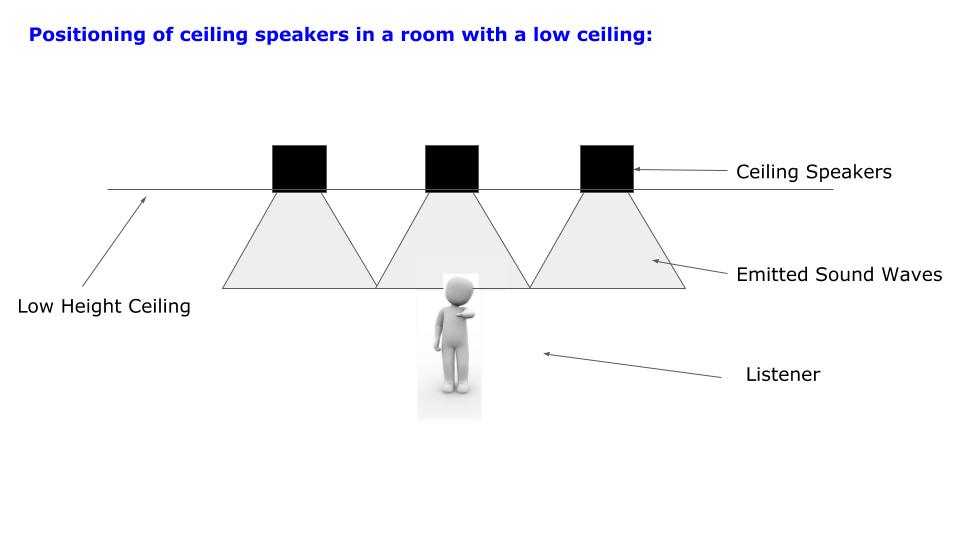
For example, ceiling height has an impact. Counterintuitively, high ceilings often
require fewer speakers than low ceilings, because as a ceiling is lowered, speakers
become closer to a listener’s ears.  So two identically sized rooms with different
ceiling heights will require different numbers of speakers.

“How does that work?”
Each speaker works by emitting waves of sound, these start at the centre of the
speaker cone and radiate outwards towards the floor.  Ideally, to avoid any sound
black-spots, the waves of sound from adjacent speakers should cross just above
a listener’s ear height, but with low ceilings, unless you use a speaker with a much
wider dispersion than normal, the number of speakers you need to achieve this
significantly increases.


“But having lots of speakers makes my ceilings look ugly!”
How many of your guests enter your venue and look up at the ceiling?
Unless you have wonderous artwork or lighting features on the ceiling,
most guests gaze at their eyeline or just above or below this point.
If however, you are concerned about this, CGA can now finish speakers
to any RAL or Pantone colour to ensure that your speaker grills
seamlessly blend into the ceiling whatever its colour.

So the key question to ask is not how can I reduce the number of
ceiling speakers I need, but how many speakers do I need to get the
best possible audio experience for my guests.

CGA Integration … Making hospitality sound great!

Tuesday, 27 November 2018

Sounds Good?

We have moved this content to and added more content on our new website:

www.cga-integration.co.uk


We all talk about “good sound” but what is good sound in a hospitality context?
Good audio is like good visual, it’s very personal and an individual's perception
of quality sound can be very subjective. Having listened to studio recordings of
music tracks, these are very different to the presentation of music that most end
users expect to hear, and with the increased use of mp3 and headphones, the
appreciation of sound is further changing.
That aside, however, there are still some key characteristics that demonstrate
the basis of good sound.

So what should you listen out for?

Good sound should be evenly distributed throughout a space; as guests move
around an area they should receive a consistent audio experience.  Expanding
from this, you should consider your space layout. In adjoining areas where there
is no wall, door or physical barrier, or where the door will be open much of the
time, the sound will travel between adjoining spaces so you need to consider
how zonal sound can be used to create a more consistent experience for your
guests. A great sound system will also envelop you as you enter a space and
the actual sound sources should be hard to define.  This does not mean that
the sound needs to be loud, just seamless. In addition, the sound should be
balanced; there should not be too much or too little bass, mid or high frequency,
(unless of course, you are building a nightclub), and this mix should remain
balanced at both low and high volume levels. Another key area to consider is
where you might need less sound.  You may want lower sound levels in bar
areas and at service points to improve conversation and communication flow
between your customers and your team.

So what are the traps that lead to bad sound and how can these be avoided?
Considering audio hardware, there are certain things that you can do to maximise
the quality of your Hospitality sound.  
Unless you can get wall mounted speakers high above head height, installing these
in big spaces isn’t ideal, as they just make the perimeter of that space louder than
the centre and you don’t create a consistent audio experience.  Similarly, unless you
are on a stage or in a nightclub environment, splitting sound across separate bass
and mid high cabinets can often lead to unbalanced sound and should be avoided.
Using small speakers, although often considered aesthetically pleasing, cannot
supply a warm full sound.  A better alternative is the use of full range speakers,
possibly finished in a custom RAL colour to match your chosen decor, as these
can deliver superior sound whilst blending with your interior design.
Thinking about sound system design, considering the acoustics of a space is
also key in delivering the best possible sound.  Speakers pointing at or across
hard reflective surfaces will not generate good sound. Similarly, sound systems
created with many different areas and speakers but only a few amplifier channels
do not work.  To get great sound, different areas and speakers often need a
different amplifier channel and EQ. Finally, once the system design and hardware
have been considered, the music content needs to be addressed.  Not just what
tracks you are playing to evoke the right mood for your venue or for a particular
time of day, but the type of music format you are using to create the best possible
sound.  The quality at which a track is recorded makes a huge difference to the
end result of how that track sounds when it is played through a sound system.
No matter how good a sound system design and installation is, if you put in poor
quality music you get out louder poor quality music!  Conversely, with a well
designed and installed audio system, if you put in well-recorded music you get
out great sounding music.
To help with this and to avoid any of the legal copyright issues, look to professionally
curated music lists and fit these in a player.  This prevents your staff from putting on
their favourite tracks or from plugging in their phones which will help you to avoid
both legal and branding pitfalls.

So to make a hospitality venue sound good, good sound needs to make a sensory
engagement with your guests, and this can be achieved by the audio being an
integral part of the design, decor and planning of a new or refurbished space.

Tuesday, 25 September 2018

Design Led Sound Solutions from CGA Integration

We have moved this content to and added more content on our new website:

www.cga-integration.co.uk


Holistic visual design

Have you ever been frustrated that your interior design is being compromised by the functional requirements of services? Do you have an eyesore of a white grill on a coloured ceiling, black boxes on white walls or maybe too many controls on the walls, with staff unable to get the consistency you planned and designed for?

If this sounds like an experience you are all too familiar with, CGA Integration can help you to address these aesthetic issues, whilst still enabling you to deliver the functional design that your client’s venue demands.

CGA can deliver speakers and grills resprayed to any RAL colour to ensure the integrity demands of your design, even after the services have been installed. With this available from CGA for all services, not just for sound equipment, we can help you to deliver a truly holistic visual design.

In addition, the control systems that CGA deploy not only deliver great sound but can also control; lighting, video, blinds, air conditioning and a whole range of other services. This enables you, the designer, to deliver a control platform for the whole environment, rather than creating a wall full of buttons to control varying parts of it!

So rather than planning how to layout a wall of switches, let us help you to change the conversation to talk about integration in the plant rooms and colours and fonts for the iPad control screens.

Addressing the soundscape
Taking things one step further, designs that encompass all the senses create a truly holistic guest experience. Although the visual design creates a wonderful first impression, hearing is one of our primary fight and flight senses; get the sound wrong in a venue and guests may never be comfortable in the space, no matter how wonderful it looks!

To generate the best sound, you need to ensure that the correct speakers and reproductive equipment are installed for the space. Not every sound system will deliver the right sound. How you hear sound in a space changes considerably with decorative finishes and also once it is occupied. CGA can help by creating the best sound system for your space, choosing and fitting the right equipment to deliver what your client needs it to do, throughout the day, every day.

Designed for the future 
Once you know that your design will both look and sound how you envisaged, how do you ensure that it stays that way, whilst still allowing flexibility and future proofing for your client?

Here at CGA we always plan for the future. With every sound system we create, we ensure spare cable runs to allow for changes to systems without the need for rewiring and we install digital control platforms which allow equipment to be monitored and tested by us remotely, (in real time), to ensure that all hardware is at it’s best at all times. These same digital control systems also allow systems to be reconfigured and reprogrammed easily with no hardware changes to repurpose or refresh a space for added peace of mind.

Why not talk to us about getting the sound system right for the space you are designing for. This might just add that final edge to your design; keeping your client’s guest’s spending and your client coming back to you for more great designs.

CGA Integration … Making hospitality sound great!

Monday, 23 April 2018

Meeting Room Technology

We have moved this content to and added more content on our new website:

www.cga-integration.co.uk


Technology is by its very nature a fast-moving industry.  As it constantly
evolves, so does how we interact with it, both at home and at work.  As
such the requirements for meeting rooms are changing quickly, with a
growing focus on much more visual and video content being demanded
across a wide spectrum of events & devices.


During meetings, delegates need to connect and collaborate on screen,
in real time and at the highest quality.  They need to be able to move
seamlessly across a range of AV and connectivity solutions, which in
turn need to be available in each, and sometimes multiple, meeting room
areas.


In addition to a main room, delegates need quality break out areas to
develop ideas from the main meeting.  These also need to be spaces
where they can relax and process new information or network and bond
with team members & their clients whilst still being supported by the AV
they need.


These meeting room requirements can be delivered by addressing six
main technological areas; HDMI, BYOD (bring your own device),
Connectivity, Video & Voice Conferencing, Speakers and Digital Control.


HDMI Connectivity
As we start seeing 4k TV’s at home, the minimum quality expected in
meeting rooms is now HD (1080p) resolution.  Most new laptops and
video devices are based on the HDMI connector that delivers digital
quality in high resolution.  Upgrading the connectivity in all meeting
rooms to HDMI is essential, although unfortunately VGA connectivity
is still required for legacy equipment.


BYOD
Delegates no longer just have a laptop which they wish to present from.
BYOD facilitates presentation on screen of content from iPads, iPhones,
Android devices, Chrome devices, Macbooks and laptops, all wirelessly,
from anywhere in the room.


With delegates regularly working in the Cloud and not actually having a
device that stores all their information, this does mean that the need for
a good or preferably impressive internet connection into meeting rooms
becomes essential.  


Delegates can then connect and present quickly and easily using
Chromecast and Airplay as they might at home, or through a useful app
quickly downloaded to their device.  BYOD also facilitates wirelessly
delivered screen sharing; enabling two or more users to present their
content on screen for comparison and review.


Connectivity; touch screens
We are all too familiar with the touch screen functionality of our portable
devices, phones and tablets.  Once delegates have their presentation or
image on screen in a meeting room, they want to be able to touch it and
move, explore, explode or manipulate what they are presenting.  All of
this is possible with a simple USB connection to the screen. Once this is
applied, suddenly the screen can be an extension of their Windows or
IOS operating experience, allowing full interaction on the screen.


Video & Voice Conferencing
Historically dedicated equipment was needed to launch a video
conference (VC) call, this needed to be used by all parties involved
and the telecoms provider needed to provide a solid connection or
bandwidth between all the locations.  But now VC has become ‘the
norm’, and Skype, webex and a range of other video and voice
conferencing facilities are now available in the Cloud.


This means that if a key delegate is unable to travel but wants to
attend a meeting and actively participate in discussions, it is possible
to use such services to bring remote delegates up onto the screen
and hear them clearly through speakers.  In addition, they can share
their desktop computer on the meeting room screen, as described in
BYOD above, enabling them to make a presentation and discuss this
with the other meeting delegates as if they were in the same room.
In a more advanced or larger conference suite it is also possible to
bring remote delegates up on a separate screen to the data, so that
you can see more of the individual, including their body language and
hand gestures.


The move to the Cloud makes it much easier for venues to offer VC
connectivity. A simple USB & video connection to the delegates
Windows laptop or Mac, connects the in-room speakers, microphone,
camera and screen to the delegates call on their VC software.  This
ensures that the delegates has the company IT security that they need,
with the ability to share the call with all in the meeting room. The same
can also be done with a voice call from a mobile phone and all delegates
can be heard, and hear, through the installed ceiling microphone and
speakers.


Installed Quality Speakers
With video content and conferencing, you need both the correct image,
and quality sound which can be heard throughout the room. Speakers
on a television or a sound bar underneath it, are often only enough for
a small room.  If content is to be heard throughout a room, there is a
requirement for quality ceiling mounted speakers throughout. If rooms
are also to be used as private dining spaces, quality speakers are
essential to deliver ambient sound at a quality that reflects the food &
service of the venue to all diners.


Digital Control
As mentioned above, we are all now familiar with touchscreen control.
Centralising the control of the meeting room functionality; screen,
source, lights, AC, VC, etc, can all be pulled back onto one control
platform.  This gives venues and their delegates a tailored, branded
controlled experience, which does not rely on ‘finding the remote
control’ or physically finding a button to press.


Most of the modern display technology and certainly the screen
sharing products all offer the ability to personalise the display of the
system.  This allows venues to add their own Branding and personalise
any login instructions for delegates, making their systems clear and
easy to use. When delegates enter a room the screen can show any
message, logo, room name and instructions on how the delegates
can connect their device to work in the space.

A digital control platform does require some IT backbone, but not
only does it offer the client a better experience, but enables the
venue’s AV integrator to connect and diagnose any problems in real
time and enables the system to proactively send out warnings and
alerts before any hardware fails.