Showing posts with label Hospitality. Show all posts

Saturday, 27 March 2021

What are Hybrid Meetings?

We have moved this content to and added more content on our new website:

www.cga-integration.co.uk


Before the Coronavirus pandemic, BYOD was the ‘buzzword’ for meetings.  Hospitality venues wanted to ensure that their meeting and conference rooms allowed delegates to connect and collaborate on screen seamlessly and wirelessly from any device as part of an event, without the need for dedicated hardware, lots of messy cables or a lengthy setup process.

Then the pandemic hit, and with it came remote working, video conferencing and social distancing.  BYOD seemed a thing of the past.

With the goal posts on social contact continually shifting, the world of meetings has evolved.  Over the past year we have all become experts on Zoom Meetings and using Teams, with each of us operating from our own homes in whatever space is available.  But with this has come the frustrations of internet connections dropping out, distraction and noise from others working or learning in our households and the yearning for in person social interaction.    

As restrictions are gradually lifted and people are able to meet in person once more, although the need for BYOD hasn’t gone away, the primary need for meetings will be to link remote delegates with those who are able to meet in person, socially distanced, within the meeting room.  

Enter ‘The Hybrid Meeting’.                  

With everyone now capable of running video conferences and meetings via their own device at home, BYOD has evolved into BYOM (bring your own meeting).  BYOM systems enable you, with a few simple connections, to deliver your meeting on the infrastructure of a hospitality venue’s meeting room, with all the technological benefits that brings; a large screen, installed quality sound and microphone systems and surroundings more conducive to an effective working environment.  This inturn enables those colleagues who are present in person to join with remote colleagues dialing in, where everyone can see the same screen viewed in the room. The good BYOM systems have all the functionality of BYOD, but are delivered in the room as well as on the call or stream of remote colleagues.                                          

Large scale BYOMs can be set up at Hospitality venues to host presentations and conferences for larger numbers of delegates.  You can now run meetings in your larger spaces with a video call or stream going out to remote delegates, routing presenters, radio microphones and on screen presentations to a stream or call, as well as showing this on screen for the distanced delegates in the room.  This type of hybrid meeting is easily achievable in house, but when numbers of delegates are particularly large, you may want to get your events company involved to ensure that the event runs smoothly for all delegates, wherever they are, and to make the event as dynamic as possible.

To fully embrace Hybrid Meetings on whatever scale, you need to get the in-room AV infrastructure right.  

CGA is here to help you get the most from your meeting rooms.  If you would like to find out how your current AV system can be modified to address the issues we face in these current times, why not give us a call? 

Whatever type of meeting you are facilitating, and however technology evolves to meet the needs of our ever changing world, CGA can advise you.  Why not give us a call on 01344 456500 and see how you can unlock your hybrid meeting potential today.

CGA Integration … Making hospitality sound great!

Friday, 9 October 2020

Meeting Room & Events AV in restricted times

We have moved this content to and added more content on our new website:

www.cga-integration.co.uk


This year the situation we find ourselves in is unprecedented.  We at CGA know that as a result, Hospitality venues have very little budget at present, so we thought that some ideas and tips on how to make the best of your current AV may be helpful. 

As the Covid situation changes, we all know that Government advice is constantly changing and varies throughout the UK.  Currently the general guidelines reflect the need for gatherings in small groups, (rule of six), no shouting or singing, and keeping your distance.  These rules pose challenges when it comes to delivering quality face to face meetings or important conference calls, but with carefully planned technology and AV, these difficulties are not insurmountable.

Facilitating better calls

Are your clients currently making business calls from their spare room, kitchen or lounge?  Do they feel their home is not delivering the correct ambience for meetings, or do they find themselves not in a ‘business state of mind,’ (as they still have their slippers on!)  Coming to your venue could help them to get into work mode, focus better and present the best version of themselves.  Wearing their business attire and presenting themselves in a meeting room that sounds great and has a better camera than their laptop, could increase their productivity.

All the design elements you have invested in; great decor, soft carpets, comfortable chairs and quality AV can come together to create an optimum environment for a video call.  The presence of soft furnishings helps to eliminate echo and reverberations, often too prevalent in kitchens and modern minimalist homes, which detract from the quality of sound in virtual meetings.

Ensuring delegates can be heard

To effectively get your message across in a room of socially distanced delegates, you need what is called a "Sound reinforcement system."  This is best done with multiple ceiling speakers spread through a room, as each speaker gently reinforces the sound of the delegate speaking and saves them from shouting, delivering even sound throughout a room without the aggression and front of room energy generated from a PA system. Many of your function rooms will already have ceiling speakers for background music, and with care, these can be retasked without decoration, to make a vocal reinforcement system to help your delegates deliver safe and effective presentations.

Delivering Hybrid meetings

Even if we are only allowed to have a small number of delegates in our rooms and they have to be socially distanced, it is still possible to enable them to successfully meet with distanced colleagues via a ‘call’ if you get the AV in the meeting room right.  Current AV allows your existing radio microphones to be linked to a call, or for a dedicated ceiling microphone to be deployed to cover a whole room to more effectively bring together delegates who are both at the meeting in person with those dialling in remotely.

Enabling large scale virtual events

Although it is no longer possible to gather everyone together into one room for key presentations in an old-style company conference, did you know that your lectern or radio mics can be linked to a ‘call’ with an HD camera to make a live stream to remote delegates, at the same time as presenting in your function room?  A small group of individuals can reveal the big-ticket items and key corporate messages to everyone in the company, without geographical bias, from your venue.

Whatever type of meeting you are facilitating, we are here to help.  If you would like to find out how your current AV system can be modified to address the issues we face in these current times, please give us a call, we’d be happy to help.

CGA Integration … Making hospitality sound great!

Monday, 29 June 2020

Thank you for the Music

We have moved this content to and added more content on our new website:

www.cga-integration.co.uk


Great News! English, Scottish and Northern Ireland hospitality venues are able to reopen their doors from July.  After three months of Lockdown this is brilliant news, but if you have a music system, didn't the government say that venues are no longer allowed to play music?

That’s not true!

You are not allowed to stage live music performances, open mic nights, comedy or drama, but music to create an atmosphere in your venue is still permissible and arguably now more important than ever.  

You can’t have incredibly loud music, as we still need to observe some level of social distancing and this would cause guests to have to shout to make themselves heard; Shouting, singing and chanting all increase the risk of aerosol transmission, which is how COVID -19 is spread, so you need to get the audio levels just right to aid the safe reopening of your venue.

If you are concerned about certain members of staff turning up the level of your sound system or even regulating your own passion for music, CGA can limit the power available on your system so that levels cannot go too high.

Now, more than ever, it is key to have your venue sounding great, opening with no sound or poor sound could further damage the ambience of your venue.  Some customers will be emerging from Lockdown very tentatively.  They have been safely cocooned in their homes with familiar sights, smells and sounds and when they return to the warmth of their favourite hospitality venue they will find it changed.  With venues only being able to operate at  ⅓ to ½ of their pre-COVID capacity, the atmosphere will be very different.  

So now is your chance to really show off your sound system!  Numerous small speakers carefully spread throughout a venue will create a lovely consistent, low level all surrounding sound, that will help to fill in the gaps generated by reduced capacity and make all your guests still feel right at home.

If you have any specific questions regarding how we can help with your sound system please get in touch.


CGA Integration … Making hospitality sound great!

Tuesday, 26 May 2020

The changing face of worship; how the Covid -19 pandemic may help to expand church congregations

We have moved this content to and added more content on our new website:

www.cga-integration.co.uk


The Covid-19 pandemic has had a far reaching impact on every aspect of society, and how we worship is no different.  Gathering every Sunday at church to share a service with other members of our congregation may no longer be possible, but this does not mean that communal worship has ceased.  Churches across the land have moved online.  The traditional weekly gathering has been replaced with online services, webstreams and Zoom calls.  Although this has happened through necessity, we must embrace the opportunity that this situation has presented us with and capitalise on the new technological proficiency that we have developed in our local church communities.

Moving forward, as we are permitted to open up our churches and buildings for worship, there will be hesitation from certain members of the parish.  Not everyone will be keen or able to rush back to a shared public space for their regular worship.  As such, there will still be a role for broadcasting weekly online services, to ensure that everyone in the community continues to be provided for.  But this should not be seen as a hindrance.  In fact, in addition to regular parishioners watching online, there is also a new group of people who have found the church during this pandemic.  A group of people who like the accessibility of ‘church at home’ and online services.  Some may well be watching on ‘catch up’ at a different time or even on a different day to the usual Sunday service.  Services online have actually grown the size of regular weekly congregations.

As we gradually move back into our churches, I think we need to develop a ‘new normal’ to include those people who for whatever reason are not with us for our weekly service in person. These may include people in care homes or elderly members of the parish who are no longer confident or able to travel to church.  Couples who do not feel comfortable bringing their baby or young child to church or leaving them in the creche or at Sunday school, who find it less stressful to enjoy the service at home.  Past members of the congregation who have moved away but appreciate the opportunity of familiar Sunday worship with old friends.  New online members who may be geographically distant but who are drawn to your style of worship or those who are local but just enjoy the flexibility of worship ‘on demand.’

Worship leaders need to think about how they can include this new remote congregation in their main services.  Laptop microphones are not good enough to pick up sound from the whole church.  A digital sound processor is needed to connect the existing sound system and microphones being used in the church service to ensure that sound can be clearly transmitted from both the spoken word; readings, prayers and sermons, through to musical worship; communal hymns, choirs and music groups. In addition, a motorised and zoomable digital camera will be needed to effectively record and transmit all aspects of the service for the remote congregation.

This might mean having a camera operator during the Sunday service, ensuring that the right image is shown at the right time or words for hymns are visible on screen.  Camera angles will need to be considered as we think about individuals' privacy as well as young and vulnerable members of the congregation who may attend a service, but who should not be broadcast on a web stream or call to unknown end-users.  These restrictions may dictate the need for prerecorded services rather than a live stream, giving you a chance to review and edit the service and send it out a few hours later.  Thought will also need to be given to communicating how members of the virtual congregation will be notified about and view the services and possibly who the link is sent to to enable a remote connection.

The good news is that a lot of these questions have already been broached during the pandemic and you already have a lot of the tools you need to make this happen.  The same processes which enable the interfacing to the web or Zoom stream which you are already using during lockdown can still be used.

The hardware required to link your sound system and connect your church to the recording stream is an investment and possibly more than had been planned and budgeted for at this time.  If you are not already active in this area, grants are available from church bodies to help you to set up online during this period of social distancing.

By taking the step to invest in a digital sound processor to enable the interfacing to the web or Zoom to effectively stream services will have the added benefit of improving the sound quality within the existing church sound system and through the induction loop, so the sound for all worshippers, wherever they are joining you from, will be the best that it can be.

CGA Integration … Making hospitality sound great!

Saturday, 7 March 2020

Now is the time

We have moved this content to and added more content on our new website:

www.cga-integration.co.uk


As we move into a new decade, 2020 has brought with it new challenges for the Hospitality sector.  International forces such as the growing awareness of Global warming; epitomised by the Australian bush fires, new personal and political eco priorities, the impact of Covid 19 and potentially even Brexit have led to, and will probably continue to impact upon public gatherings, meetings and events.

It is unlikely that we will witness the growth of this area at least in the short term, especially as companies and potentially in time more governments, impose travel bans or recommend limiting social contact.  So what can we, as venues, do to address this change in circumstance?  Has the requirement for meetings and social contact actually gone away, or do we just need to get smarter about how we think about addressing a need that is still very much a reality?

The position we currently find ourselves in shouldn’t be seen as a time to reposition our meeting spaces. As I see it, the meeting’s business will just evolve.  Good business is always best done face to face and with so many social and personal benefits associated with gathering together, I believe it will still be essential for certain people to travel to at least some events.  But as we all address both travel risks and our own carbon footprint, I think there will always be individuals who may not be able to be there in the room, but who certainly will need to be part of the meeting, presentation or event.  Our challenge is to ensure that they are included.

So what can you do?  Cramming everyone around a laptop is just not a valid option and putting individuals on the projector screen via an Internet call does not fully include them in the meeting.

CGA can deliver a range of integrated Hospitality meeting room solutions that makes the process as interactive as possible in the absence of everyone actually being there. Technical solutions with the connection of one or two cables, will allow the whole room to be present through both sound & video, on any call from a clients device through Webex, Zoom, Fuze, Skype or Jabber to name a few key platforms.

Ceiling-mounted microphone panels can be installed and finished to a RAL colour.  When connected to a call, these will enable the whole room (24 + people, subject to ceiling height), to be heard clearly, and they can quickly disappear when the space is in use for other purposes.  In addition, the same ceiling speakers that spread quality music across your room for dining events can also be used to relay the sound from the remote parties.  Spreading ceiling speakers across the room prevents the ‘loud at the front and quiet at the back’ effect of older conferencing systems.

For clarity visuals as well as sound, an HD camera mounted around the main screen can be manipulated to zoom and pan around the room to catch all delegates, or multiple cameras can be used to show physical resources brought into the meeting.

Can you just make a conference call?  Sometimes this is an option, as staff or delegates often just need to connect voices quickly to bring a manager, key team member or contractor together to make a decision and ensure the meeting concludes efficiently.

To help you with this, CGA can offer a fully rechargeable audio conferencing solution that is fully portable.  It can be stored in a charging case or on trays in communal areas so that this system is always ready to go. This solution can be deployed anywhere inside or even outside your hotel, as once charged, all it needs is a client with a device to make the call (e.g. phone, laptop, or pc), so you can make that conference call from the beach bar, roof terrace or even nineteenth Tee!  You can connect a single call by Bluetooth, (using NFC pairing if enabled on your phone), USB or just an audio cable to mobile devices.  This system can connect 24 people ‘around a table’ to a remote caller with great two-way audio.  Further functionality can also be gained by joining multiple calls, (up to a maximum of three), one on each of Bluetooth, USB and audio jack, to join the three remote locations with the other people in the room.

Ask for a demo today as you will be surprised at how ‘joined-up’ these systems are and how you can start showing both your staff and your clients options to manage both their travel and carbon footprints.

CGA Integration … Making hospitality sound great!

Tuesday, 17 December 2019

Do you hear what I hear?

We have moved this content to and added more content on our new website:

www.cga-integration.co.uk


Now we are fully immersed in the festive season and Christmas Day is fast approaching, I have been pondering; What is the sound of Christmas?

No-one wants it associated with sounds that conjure up feelings of anxiety, fear or disappointment, such as emergency services sirens blaring or bleeps sounding when you are on call.  I’m sure Retailers want it to be cash registers ringing and ‘chip & pin’ machines beeping, local churches might like it to be carols being sung or congregations celebrating the messages of the Christmas story and clearly some radio stations believe it should be back to back Christmas music from the beginning of November.  In contrast, you may prefer the magic of a snowy day where all sound is muffled and quiet, when the world takes on an unnatural eerie silence, except for maybe the crunch of snow underfoot or occasional bird song.

For me there are certain songs and sounds that are intrinsically linked Christmas; Paul Young’s ‘Love of the common people’ always reminds me of a certain Christmas school disco and the intro to the Pretenders ‘2000 miles’ transports me into the festive season within a few bars.  These are very personal prompts associated with my own memories and they will mean little or something very different to someone else.  The truth is that each one of us will have a different idea of what their perfect Christmas would be and as such the sound of Christmas will be different for everyone.  What can be agreed upon is that music and sounds evoke powerful memories and feelings in us all, and audio plays a key role in creating your own magical Christmas experience, whatever that may be.

In fact, as with every celebration large or small, Christmas is a truly multi-sensory event.  All the sensations; sights, smells, sounds and tastes add together with our imagination, memories and emotions to create our own personal Christmas experience, missing any one element out would detract from the feeling as a whole.  The sound and experience of Christmas is a very personal thing and what we all often seek is the warmth and security of familiarity whether through a song, film, place or just being with family or people who know you best and with whom you can relax.

We at CGA wish you all a safe, warm and happy Christmas, whatever that means to you.  We hope that the New Year sound as good, if not better than this year!


CGA Integration … Making hospitality sound great!

Friday, 6 December 2019

Don’t forget your most important resource… your Team!

We have moved this content to and added more content on our new website:

www.cga-integration.co.uk


Motivating your team through their working environment is a key way to help drive your customer’s guest experience. In the hospitality industry, it is always vital that we deliver exceptional customer service to reinforce our Brand values and hopefully ensure repeat business. Obviously the look, ambience and technology infrastructure of a venue is key in delivering this, but it is the staff that work at the venue that are paramount in ensuring that your guests stay is a memorable one, for all the right reasons! Valuing and motivating staff comes in many guises; pay, benefits, empowerment, promotional prospects, but working conditions are also key. Ensuring that care is taken over the environment for your staff areas, as well as those for your guests, will help your staff to feel valued and in turn help them to ‘live your Brand’. Improving Back of House Areas using AV Increasingly CGA Integration is seeing savvy employers investing in their staff areas; using AV technology to enhance ‘Back of House.’ Over the years, CGA has installed sound systems and digital signage in staff areas at venues such as The Dorchester, Park Lane and the staff canteen at Hyatt Regency London - The Churchill. We have also worked with partners to install digital signage back of house in hotels, to ensure that their staff arrive and leave work in a pleasant environment and are kept up to speed with staff news and current affairs. Back of House Sound Systems Installing sound systems throughout staff changing areas and back of house areas will help staff to feel relaxed when starting and leaving work. Some venues use soothing music, while others choose local radio stations with news, to ensure that the staff are up to speed with what is happening locally, benefiting both them and in turn your guests. Back of House Digital Signage Gone are the days of paper bulletins to inform staff of important news and key staff events, email has taken over, but at times where your staff might not have access to their mobile phone or computer, digital signage, (a generic term for information disseminated through electronic screens), can be used in staff areas to keep them up to speed. Venues are using this to inform staff of; important corporate news, key employee information and more crucially staff social events and activities, even to wish employees a Happy Birthday! Many employers are very conscientious in differentiating between corporate and staff information to ensure that members of staff feel their events are social occasions. The way digital signage is presented can help with this differentiation. Help your team to live your Brand Creating a back of house environment that is synonymous with your Brand, one which is inclusive to the longest serving and newest arrival alike, will help your staff in turn better deliver your Brand to your customers, selling and upselling products much more effectively than brochures or websites alone. If you think this is an area that your hotel could benefit from then please do get in touch to discuss how AV can be used to empower your most important resource … your team. I look forward to hearing from you. Chris Gunton Managing Director CGA Integration

CGA Integration … Making hospitality sound great!

Saturday, 25 May 2019

Why? What’s the point of fitting sound systems in hospitality venues?

We have moved this content to and added more content on our new website:

www.cga-integration.co.uk


I get very absorbed in speakers; choosing the right speakers, in the right number, placing them in the right location and even making them the right colour.  Speakers are important.
 
But let’s go back a step further and consider; what’s the point of fitting sound systems in hospitality venues?

Long before the written word was widespread, communication was aural as well as oral.  Our prehistoric ancestors used sound and rhythm to communicate and over time this communication evolved into songs and stories.  Although there has been a shift towards written communication, (albeit more recently via email, text and social media), aural communication is still an intrinsic part of our everyday soundscape.  Research has even shown that music is a huge influence on both our mood and our mental state.  Sound is important.

We humans make noise.  Sometimes we want music to disguise the sound of the other humans around us, to help us to feel that our experience is more pleasant or personal to us; reducing the impact or presence of others.  Just look at the number of people wearing headphones as they move around in crowded areas or sit on a busy bus or train.  We often choose sound to relax, and in a Spa environment for example, music can be utilised to replace the everyday noise of life, giving guests a completely contrasting soundscape to create relaxation and escapism.

Conversely if you have no background music at all, eating or functioning in silence or with just ambient human noise around you can feel quite unnatural, especially for the generations who have grown up with continuous music and noise as the backdrop to their lives.  Silence can create a ‘library effect,’ which can make individuals feel ill at ease, scared to make a noise, and as such failing to relax or express themselves.  So fitting a quality flexible sound system can enable you to create the right audio background, helping your guests to feel how you want them to feel in your hospitality spaces. 

Creating the right playlist for your Brand and playing this in the right format through a well designed and installed quality sound system, reinforces a venue’s Brand and its Brand values.  From relaxed to energised to engaged, different hospitality spaces may require a different soundscape; sound and especially music have an important part to play in creating the right environment for restaurants, lobbys, spas, meeting rooms and bars alike.  Like a well crafted marketing campaign, creative interior design or superior customer service, quality sound can work together with the other elements of your venue to help you to stand out for all the right reasons. 

Now more than ever getting sound right is key.  Guests are now exposed to good quality sound in many aspects of their everyday lives; surround sound, THX & Dolby cinemas, great sounding car stereos and certain mobile devices. They will notice if the sound systems in your venue do not come up to the standards they now take for granted.  To create a great sound in your venue you need to consider all aspects of audio; volume, hardware and music quality, what you are playing where and when (as this may vary by time of day), coverage (and ensuring that this is even as guests move throughout a space and between spaces) and balance between sound frequencies (bass & treble). 

Considering our prehistoric ancestors again, audio is a sense that very much wired into our body’s ‘fight or flight’ response.  Get the sound in a venue wrong and your customers will not be able to relax.  They might not be able to tell you that sound is the issue, but they will not stay for long or return very quickly. Get it right and all the elements of your venue will fit together like a well crafted sensory jigsaw, helping your guests to immerse themselves in your hospitality experience and truly relax.

Chris Gunton
Managing Director CGA Integration

CGA Integration … Making hospitality sound great!

Wednesday, 3 April 2019

Size is not everything!

We have moved this content to and added more content on our new website:

www.cga-integration.co.uk


“Wow look at that speaker! We’re not a nightclub!!!”

I have heard this and similar comments time and again when designing a sound
system for a client for the first time.  A regular misconception is that the physical
size of a speaker is directly proportional to the volume or loudness of the sound
system, but that is generally not the case.

It’s true that you will need larger speakers to produce sound for a live concert
than you would need to install in a restaurant, but as sound gets quieter, there
is a minimum speaker size that you will reach, after which you start
compromising on sound quality.

Sound reproduction is all about moving air particles or vibrations.  In a
loudspeaker an electromagnet is attached to a cone which amplifies these
vibrations as it moves forwards and backwards, making sound waves in the
surrounding air and pumping them towards your ears.

So how do we hear music which is made up of lots of different sounds? Without
going too deeply into the science behind this, the frequency of the vibrations
(the number of sound waves that go past a fixed point say every second)
governs the pitch of the sound produced.  To faithfully reproduce all the
different frequencies of sound in a piece of music, good quality speakers use
different sized cones dedicated to high, medium and low frequencies, hence
the need for a minimum sized speaker to accommodate these. Generally in
each speaker cabinet there will be a bass driver (for low frequency sound
waves) and tweeter (for high frequency sound waves) and these will ensure
that sound from all frequencies is covered.

High frequency sound waves generate small movements of a small loudspeaker
surface area (the smaller tweeter cone) and lower frequency sound generate
large movements of a large surface area (the larger bass driver cone).  Basically
the lower the pitch of the sounds you want to replicate, the larger the surface
area of the cone and the larger the cubic volume of the speaker box you will need.

Sound volume (measured in decibels) is actually down to the amplitude of the
sound waves.  The amplitude of a sound wave (or the maximum distance moved),
is a reflection of how much energy it carries, the more energy it has the more air
particles that are moved for longer and the greater the sound we hear.

So, if you want a warm and full sound system throughout all the areas of your
venue, then you will need to have enough surface area of loudspeakers to excite
the air in the space and enough cubic volume of speaker cabinets to enable a
warm and comfortable sound to be generated in all areas.  This will be delivered
through a combination of; the right number of speakers of the right size installed
in the right locations.

Here at CGA Integration we generally use the smallest speaker cabinet required
to deliver a good full range sound in the required space, often in many multiples
to ensure that the distance from the customer to the speakers remains as
constant as possible as they move around the space.  This is explained in
Here you will find lots of articles dealing with speaker solutions including
“design led sound solutions” where we explain how to minimise the visual impact
of speakers whilst still generating superior sound & “speaker location; a sound delivery”
which considers the different types of speakers available and where they can be
installed for maximum audio effect.

To sum everything up, if speakers are too small or too few are used, this can
lead to issues in sound reproduction and quality, which will affect the
ambience of your venue.  Just remember, your AV design is created that way
or a reason, as “you cannot change the laws of physics!”

Friday, 1 February 2019

Why so many speakers!?

We have moved this content to and added more content on our new website:

www.cga-integration.co.uk


“Why do we need so many speakers?”
This is one of the most regular questions we get asked by clients.  The answer is
that the number of speakers we use in a sound system design depends on both
the acoustics and the layout of a venue, and here at CGA we will only recommend
the optimum number required to deliver the best possible audio experience; no
more and no less.

Sound should be like great design and should envelop and surround you from the
moment you enter a room. Visually, great interior design flows through a venue
and demonstrates the careful thought put into creating a flawless experience for
your guests.  Audibly, a well-installed quality sound system will do the same. With
the right number of speakers it will not be too loud or have audio ‘blackspots’, but
the audio will be present equally across all areas and will be a key component of
the overall sensory experience in your venue.

“But why does my venue appear to have more speakers than others?”
Calculating the number of speakers needed by comparing venues of a similar size
will not always work, as acoustics play a key role in determining speaker numbers.
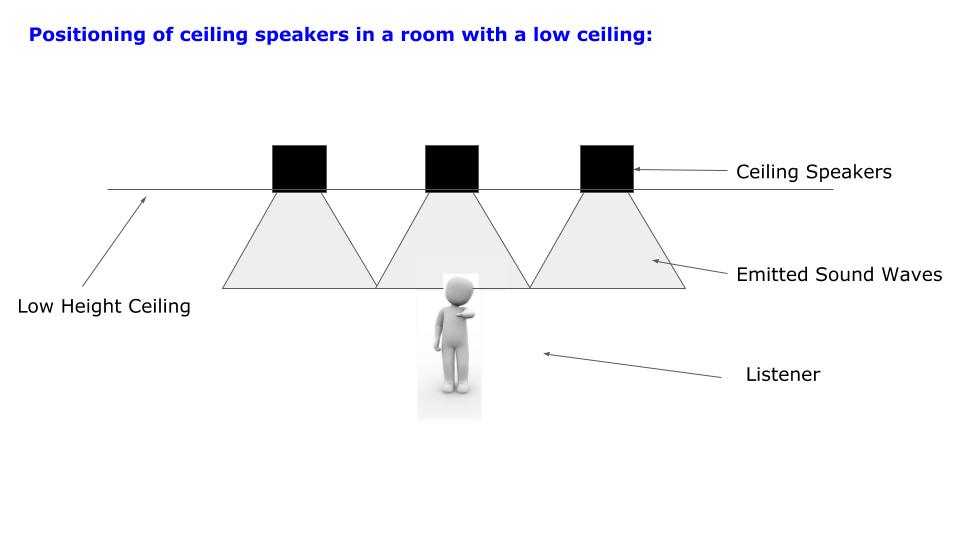
For example, ceiling height has an impact. Counterintuitively, high ceilings often
require fewer speakers than low ceilings, because as a ceiling is lowered, speakers
become closer to a listener’s ears.  So two identically sized rooms with different
ceiling heights will require different numbers of speakers.

“How does that work?”
Each speaker works by emitting waves of sound, these start at the centre of the
speaker cone and radiate outwards towards the floor.  Ideally, to avoid any sound
black-spots, the waves of sound from adjacent speakers should cross just above
a listener’s ear height, but with low ceilings, unless you use a speaker with a much
wider dispersion than normal, the number of speakers you need to achieve this
significantly increases.


“But having lots of speakers makes my ceilings look ugly!”
How many of your guests enter your venue and look up at the ceiling?
Unless you have wonderous artwork or lighting features on the ceiling,
most guests gaze at their eyeline or just above or below this point.
If however, you are concerned about this, CGA can now finish speakers
to any RAL or Pantone colour to ensure that your speaker grills
seamlessly blend into the ceiling whatever its colour.

So the key question to ask is not how can I reduce the number of
ceiling speakers I need, but how many speakers do I need to get the
best possible audio experience for my guests.

CGA Integration … Making hospitality sound great!

Tuesday, 27 November 2018

Sounds Good?

We have moved this content to and added more content on our new website:

www.cga-integration.co.uk


We all talk about “good sound” but what is good sound in a hospitality context?
Good audio is like good visual, it’s very personal and an individual's perception
of quality sound can be very subjective. Having listened to studio recordings of
music tracks, these are very different to the presentation of music that most end
users expect to hear, and with the increased use of mp3 and headphones, the
appreciation of sound is further changing.
That aside, however, there are still some key characteristics that demonstrate
the basis of good sound.

So what should you listen out for?

Good sound should be evenly distributed throughout a space; as guests move
around an area they should receive a consistent audio experience.  Expanding
from this, you should consider your space layout. In adjoining areas where there
is no wall, door or physical barrier, or where the door will be open much of the
time, the sound will travel between adjoining spaces so you need to consider
how zonal sound can be used to create a more consistent experience for your
guests. A great sound system will also envelop you as you enter a space and
the actual sound sources should be hard to define.  This does not mean that
the sound needs to be loud, just seamless. In addition, the sound should be
balanced; there should not be too much or too little bass, mid or high frequency,
(unless of course, you are building a nightclub), and this mix should remain
balanced at both low and high volume levels. Another key area to consider is
where you might need less sound.  You may want lower sound levels in bar
areas and at service points to improve conversation and communication flow
between your customers and your team.

So what are the traps that lead to bad sound and how can these be avoided?
Considering audio hardware, there are certain things that you can do to maximise
the quality of your Hospitality sound.  
Unless you can get wall mounted speakers high above head height, installing these
in big spaces isn’t ideal, as they just make the perimeter of that space louder than
the centre and you don’t create a consistent audio experience.  Similarly, unless you
are on a stage or in a nightclub environment, splitting sound across separate bass
and mid high cabinets can often lead to unbalanced sound and should be avoided.
Using small speakers, although often considered aesthetically pleasing, cannot
supply a warm full sound.  A better alternative is the use of full range speakers,
possibly finished in a custom RAL colour to match your chosen decor, as these
can deliver superior sound whilst blending with your interior design.
Thinking about sound system design, considering the acoustics of a space is
also key in delivering the best possible sound.  Speakers pointing at or across
hard reflective surfaces will not generate good sound. Similarly, sound systems
created with many different areas and speakers but only a few amplifier channels
do not work.  To get great sound, different areas and speakers often need a
different amplifier channel and EQ. Finally, once the system design and hardware
have been considered, the music content needs to be addressed.  Not just what
tracks you are playing to evoke the right mood for your venue or for a particular
time of day, but the type of music format you are using to create the best possible
sound.  The quality at which a track is recorded makes a huge difference to the
end result of how that track sounds when it is played through a sound system.
No matter how good a sound system design and installation is, if you put in poor
quality music you get out louder poor quality music!  Conversely, with a well
designed and installed audio system, if you put in well-recorded music you get
out great sounding music.
To help with this and to avoid any of the legal copyright issues, look to professionally
curated music lists and fit these in a player.  This prevents your staff from putting on
their favourite tracks or from plugging in their phones which will help you to avoid
both legal and branding pitfalls.

So to make a hospitality venue sound good, good sound needs to make a sensory
engagement with your guests, and this can be achieved by the audio being an
integral part of the design, decor and planning of a new or refurbished space.

Tuesday, 24 July 2018

Why do I need PPL and PRS and what do they do?

We have moved this content to and added more content on our new website:

www.cga-integration.co.uk


PPL and PRS for Music are the UK's two music licensing societies.

PPL represents performers and record companies. PRS for Music is
a society of songwriters, composers and music publishers. Both
organisations ensure that the creators and performers of music are
paid when their music is used in public.

PPL PRS Ltd is a new joint venture between PPL and PRS for Music.
They have recently joined forces to make it easier for their customers
to obtain a music licence for the playing or performance of music in public.  

The purpose of PPL PRS Ltd is to ensure that writers and performers are
fairly rewarded for their talent, but also to support those who use music
on a daily basis.

What is TheMusicLicence?

TheMusicLicence allows you to legally play and perform music in your
business, whether through the radio, TV, other devices and or through
live performances.

If you play or perform music in your business or organisation in the UK,
you will usually need TheMusicLicence. It will cover you, with one licence
and one invoice, for the use of virtually all commercially released music
available; millions of songs and recordings, including the most popular
and well-loved music not just from the UK but also from around the world.

Can I play Spotify or Apple Music in my Business?

The simple answer is no. In business terms, music streaming services
come in two forms; B2C (Business to Consumer) and B2B (Business to
Business). The core music streaming services offered by companies like
Spotify and Apple Music are B2C built for consumers, not businesses.
This means they are licensed for private, non-commercial use (perfect
to use at home with your friends & family). You need to purchase
TheMusicLicence to play music in public places, including to your
customers and employees.

But I have purchased iTunes Music so surely I can play this?

It is common in our digital age to be confused as to whether we own our
digital content. When you pay to download music or even movies for
that matter, you are essentially purchasing a license; you are leasing the contentFurthermore, you may only play this music in a non-commercial setting. You can listen to the songs yourself as much as you like, but it is illegal to play them in public. iTunes music on your iPod, iPad, iPhone, CDs, MP3s or digital files can not be used for background music in a commercial environment. Playing the downloaded music in your business violates copyright law because the act is now considered a public performance.
Public performances require TheMusicLicence.

What are Professional Creative Music Agencies?

Professional Creative Music Agencies create playlists of tracks to create
unique atmospheres and distinct brand identities for their clients.  All
music chosen by these agencies is covered by TheMusicLicence.
CGA Integration always recommends using this service, as you have
the peace of mind that when you purchase TheMusicLicence, all of your playlist will be covered. You also have the added benefit that the perfect playlist has been created specifically for your business.