Showing posts with label hotel. Show all posts

Tuesday, 7 September 2021

Helping your staff in a world managing the pandemic

We have moved this content to and added more content on our new website:

www.cga-integration.co.uk


 As we all try to learn to live with Covid and return to a ‘new normal’, our industry, which has borne the brunt of the lockdowns, restrictions and the ‘pingdemic,’ is emerging and adapting whilst still striving to deliver the highest of standards.

 Many of you have lost key staff members, gained new staff, or are struggling to fill all the key roles.  All of which puts additional pressure on every aspect of your organisation.

 Your clients are still seeking the quality experience you always gave them and many will be returning after a difficult eighteen months, expecting a truly memorable experience with that first celebratory meal out, or a meeting finally not hosted at home on Zoom. 

 Your AV systems may not be the first thing you are thinking about when juggling all of this, but if the staff who knew how to operate them have moved on, or if your AV has been neglected for the past 18 months, there may be some challenges ahead.  Whilst not life-threatening, if not addressed, these will all add to staff stress and customer dissatisfaction, instead of enhancing everyone’s experience.

 CGA Integration can help.  We offer a wide range of support solutions to help you effectively and efficiently manage your AV.  

 Did you know that most CGA installed AV systems are fully remotely supported? 

 A CGA engineer can connect and operate your system, in real-time, to support your team and to teach them how to operate and troubleshoot their AV issues whilst they are at work.

 CGA also offers support packages which include a time allowance to retrain new and existing staff members annually, ensuring that you are always getting the best from your AV systems.

 With us on board, we can help ‘smooth out the bumps’ that will follow new staffing appointments and current staff who need their knowledge refreshed after returning to the workplace.

 CGA can also help you to evolve your AV.  If you don't currently have remote support, this is something that we can add to your AV system and slowly integrate.  This will increase your uptime and reduce the amount of concessions needed when tech is not behaving as it should!  We can also help you to develop your ‘Video conferencing’ provision and ‘Hybrid meeting solutions’ in house to help you to maximise your event revenue.

 To find out how great AV support can make a difference in your venue, why not get in touch?  Call us today on 01344 456500 to give your staff one less thing to worry about tomorrow.

CGA Integration … Making hospitality sound great!


Saturday, 27 March 2021

Clean Shoes?

We have moved this content to and added more content on our new website:

www.cga-integration.co.uk


How do you prepare when meeting a client for the first time or delivering that crucial presentation?

If you’d have asked me a year ago I’d have said; clean shoes, iron shirt, for the gents amongst us we’ll choose an appropriate tie, and I even have a set of cufflinks which my wife gave me that always create conversation...

All of this has now changed, as the pandemic means that we now don our “Zoom Suits” and only dress in business attire from the waist up, presenting from home in our slippers...

But as we move forward, things are likely to evolve again. Companies will want to get their people back together in person as soon as it's safe to do so, and with the UK vaccine programme picking up pace, this may be closer than we think. Nothing works better for the charismatic sales executive than being in a room and bouncing ideas off colleagues, even if the client is remote.

Moving forward, it is my belief that there may always be someone outside the room, either because they are isolating, ill, or unable to travel due to company budgetary or environmental constraints. So the next generation meeting rooms need to be mindful of this and as such need to be a little different from the meeting rooms of old.

In the hospitality industry, we need to remember that we have so much more to offer than just the technology for meetings. However, to enable this new style of meetings to work effortlessly, getting the technology right will be vital.

Why bother to host meetings in Hospitality venues?

Hospitality venues offer so much more than being at home:

• People - welcoming, smiling, competent people who are there to help ensure your event runs smoothly and you have everything you need; no slamming doors or playing of loud music degrading your event!

Space - where a team can meet either socially distanced, virtually or a mixture of both.

Hospitality - food and drink on demand so that your time is spent with your team or customers doing business and networking with no trips to the kitchen required.

A dedicated focused environment - with no doorbells ringing, homeschooling interruptions or pet distractions.

Quality connectivity - generally hospitality has much better internet (bandwidth) than many of us have at home, ensuring the meeting or presentation goes without a glitch.

Quality surrounding - rather than hanging a spare shower curtain behind you or worrying that the window cleaner will suddenly appear, Hospitality venues have well-appointed rooms with soft furnishings that give a much better sound & ambience to calls and discussions, whether they are on or offline.

So what tech can I add to enhance the meetings offered in my venue?

In order to offer the optimum environment for meetings at your venue, there are a few things you can ensure you have in your armoury:

Well distributed sound - having a quality ceiling speaker system installed in your meeting rooms will ensure that the sound from a presenter or video call is heard by everyone in the room, without the need for a PA. Many sound systems hired by Events Companies are PA systems. PAs consist of a pile of speakers, they are normally in big black boxes and are either on stands, ground-stacked or hung and they blast out sound from where they are positioned, usually from the front of your room. The problem with this approach is that the first few rows of delegates can often become deafened, whereas those in the back of the room can struggle to be heard or hear. VR or vocal reinforcement does not use big black boxes, it is about lots of smaller speakers working gently across a room to evenly distribute the sound throughout the space. As the name suggests, VR reinforces the sound of the speaker’s voice via the multiple speakers positioned throughout a room. This in turn allows delegates to be spread out and still hear what is being said, without either being deafened or having to move forward and get closer to other delegates in order to hear. VR is a definite advantage in this time of social distancing.

Large format projection and screens - making sure all of your delegates can clearly see what is being presented or discussed is important, especially with requirements for social distancing. This might mean looking at installing a ceiling-mounted or hung screen & projector to use the advantage of height available in your space. If you have limited ceiling height please see One to All & Webview below.

BYOD - bring your own meeting is the evolution of BYOD. With everyone now capable of running video conferences and meetings via their own device at home, BYOM systems enable you to scale that meeting, with a few simple connections, to deliver the meeting on the room infrastructure: a large screen, sound system and microphone system. This enables those colleagues who are present in the room to join with remote colleagues dialing in, where everyone can see the same screen viewed in the room. The good BYOM systems have all the functionality of BYOD, but all delivered in the room as well as on the call or stream of remote colleagues.

Whole room microphones - in order for effective BYOM and video conferencing to happen, coordination of devices is required through a centralised microphone system. If clients have an in-person meeting with remote colleagues at your venue and they want to present on one call using separate devices this will not work without coordination, as the individual devices will all interact and feedback, making it a worse experience than calling from individual kitchens or spare rooms! Discrete ceiling microphones can be installed to cover your whole meeting room and take the sound of the talking delegate onto your video call to ensure everyone is heard.

One to All & Webview - many of the good BYOD & BYOM systems have the ability to share a presentation within a room enabling delegates to see slides on their own device and save them to their device. This is useful not only if you cannot get a big screen in place in your meeting room, but it also eliminates the need for delegates to keep disrupting the flow of the meeting by taking photographs of the projection screen.

What’s the future for larger-scale events and conferences?

How we address the need for larger-scale events and conferences in the short to medium term is a question that is topical for many businesses and one that may or may not be cost-effective to own, but it's something you may be asked to consider:

Virtual events - these kinds of events do not need to be hosted by hospitality venues, they require a large dedicated space, a stage and a green screen background, which can enable you to present just about anything you want to a remote clientele. If this is something you want to explore you will need to talk to your Events Company. The equipment you will need may not be something you want to own, but instead hire in and then offer on to clients as another meeting option!

Hybrid meetings - these are like large scale BYOMs for presentations and conferences for large numbers of delegates. You can now run meetings in your larger spaces with a video call or stream going out to remote delegates, routing presenters, radio microphones and on screen presentations to a stream or call as well as showing this on screen for the distanced delegates in the room. This type meeting is likely to be something you would want to get your events company involved with to ensure it runs smoothly for all delegates wherever they are and to make the event as dynamic as possible, but you need to get the in room AV infrastructure right to make it happen.

What can I do now?

Whatever type of meeting you are facilitating, and however technology evolves to meet the needs of our ever changing world, CGA are here to help you get the most from your meeting rooms.

CGA Integration … Making hospitality sound great!


Friday, 9 October 2020

Meeting Room & Events AV in restricted times

We have moved this content to and added more content on our new website:

www.cga-integration.co.uk


This year the situation we find ourselves in is unprecedented.  We at CGA know that as a result, Hospitality venues have very little budget at present, so we thought that some ideas and tips on how to make the best of your current AV may be helpful. 

As the Covid situation changes, we all know that Government advice is constantly changing and varies throughout the UK.  Currently the general guidelines reflect the need for gatherings in small groups, (rule of six), no shouting or singing, and keeping your distance.  These rules pose challenges when it comes to delivering quality face to face meetings or important conference calls, but with carefully planned technology and AV, these difficulties are not insurmountable.

Facilitating better calls

Are your clients currently making business calls from their spare room, kitchen or lounge?  Do they feel their home is not delivering the correct ambience for meetings, or do they find themselves not in a ‘business state of mind,’ (as they still have their slippers on!)  Coming to your venue could help them to get into work mode, focus better and present the best version of themselves.  Wearing their business attire and presenting themselves in a meeting room that sounds great and has a better camera than their laptop, could increase their productivity.

All the design elements you have invested in; great decor, soft carpets, comfortable chairs and quality AV can come together to create an optimum environment for a video call.  The presence of soft furnishings helps to eliminate echo and reverberations, often too prevalent in kitchens and modern minimalist homes, which detract from the quality of sound in virtual meetings.

Ensuring delegates can be heard

To effectively get your message across in a room of socially distanced delegates, you need what is called a "Sound reinforcement system."  This is best done with multiple ceiling speakers spread through a room, as each speaker gently reinforces the sound of the delegate speaking and saves them from shouting, delivering even sound throughout a room without the aggression and front of room energy generated from a PA system. Many of your function rooms will already have ceiling speakers for background music, and with care, these can be retasked without decoration, to make a vocal reinforcement system to help your delegates deliver safe and effective presentations.

Delivering Hybrid meetings

Even if we are only allowed to have a small number of delegates in our rooms and they have to be socially distanced, it is still possible to enable them to successfully meet with distanced colleagues via a ‘call’ if you get the AV in the meeting room right.  Current AV allows your existing radio microphones to be linked to a call, or for a dedicated ceiling microphone to be deployed to cover a whole room to more effectively bring together delegates who are both at the meeting in person with those dialling in remotely.

Enabling large scale virtual events

Although it is no longer possible to gather everyone together into one room for key presentations in an old-style company conference, did you know that your lectern or radio mics can be linked to a ‘call’ with an HD camera to make a live stream to remote delegates, at the same time as presenting in your function room?  A small group of individuals can reveal the big-ticket items and key corporate messages to everyone in the company, without geographical bias, from your venue.

Whatever type of meeting you are facilitating, we are here to help.  If you would like to find out how your current AV system can be modified to address the issues we face in these current times, please give us a call, we’d be happy to help.

CGA Integration … Making hospitality sound great!


Monday, 29 June 2020

Thank you for the Music

We have moved this content to and added more content on our new website:

www.cga-integration.co.uk


Great News! English, Scottish and Northern Ireland hospitality venues are able to reopen their doors from July.  After three months of Lockdown this is brilliant news, but if you have a music system, didn't the government say that venues are no longer allowed to play music?

That’s not true!

You are not allowed to stage live music performances, open mic nights, comedy or drama, but music to create an atmosphere in your venue is still permissible and arguably now more important than ever.  

You can’t have incredibly loud music, as we still need to observe some level of social distancing and this would cause guests to have to shout to make themselves heard; Shouting, singing and chanting all increase the risk of aerosol transmission, which is how COVID -19 is spread, so you need to get the audio levels just right to aid the safe reopening of your venue.

If you are concerned about certain members of staff turning up the level of your sound system or even regulating your own passion for music, CGA can limit the power available on your system so that levels cannot go too high.

Now, more than ever, it is key to have your venue sounding great, opening with no sound or poor sound could further damage the ambience of your venue.  Some customers will be emerging from Lockdown very tentatively.  They have been safely cocooned in their homes with familiar sights, smells and sounds and when they return to the warmth of their favourite hospitality venue they will find it changed.  With venues only being able to operate at  ⅓ to ½ of their pre-COVID capacity, the atmosphere will be very different.  

So now is your chance to really show off your sound system!  Numerous small speakers carefully spread throughout a venue will create a lovely consistent, low level all surrounding sound, that will help to fill in the gaps generated by reduced capacity and make all your guests still feel right at home.

If you have any specific questions regarding how we can help with your sound system please get in touch.


CGA Integration … Making hospitality sound great!
Monday, 4 May 2020

CGA Integration Working Arrangements during the Covid-19 Pandemic

We have moved this content to and added more content on our new website:

www.cga-integration.co.uk


In these unprecedented times we hope that you, your family and your teams are all safe.  I am pleased to say that all of us here at CGA Integration are currently fit and well.

CGA Integration is still operating during this Covid-19 Pandemic.  We have adapted our working practices to comply with Government requirements and are able to be on site with appropriate PPE and social distancing in place.

We are now working with our customers both to carry out on site installations and to plan how systems might need to be put in place or adapted after the country emerges from lockdown. 

If you have any AV requirements or want to discuss how your current provision may need to be adapted moving forward, please do not hesitate to call or email.

Trusting you are well and looking forward to working with you again when we can.

Chris Gunton

Managing Director
CGA Integration Ltd

CGA Integration … Making hospitality sound great!

Saturday, 7 March 2020

Now is the time

We have moved this content to and added more content on our new website:

www.cga-integration.co.uk


As we move into a new decade, 2020 has brought with it new challenges for the Hospitality sector.  International forces such as the growing awareness of Global warming; epitomised by the Australian bush fires, new personal and political eco priorities, the impact of Covid 19 and potentially even Brexit have led to, and will probably continue to impact upon public gatherings, meetings and events.

It is unlikely that we will witness the growth of this area at least in the short term, especially as companies and potentially in time more governments, impose travel bans or recommend limiting social contact.  So what can we, as venues, do to address this change in circumstance?  Has the requirement for meetings and social contact actually gone away, or do we just need to get smarter about how we think about addressing a need that is still very much a reality?

The position we currently find ourselves in shouldn’t be seen as a time to reposition our meeting spaces. As I see it, the meeting’s business will just evolve.  Good business is always best done face to face and with so many social and personal benefits associated with gathering together, I believe it will still be essential for certain people to travel to at least some events.  But as we all address both travel risks and our own carbon footprint, I think there will always be individuals who may not be able to be there in the room, but who certainly will need to be part of the meeting, presentation or event.  Our challenge is to ensure that they are included.

So what can you do?  Cramming everyone around a laptop is just not a valid option and putting individuals on the projector screen via an Internet call does not fully include them in the meeting.

CGA can deliver a range of integrated Hospitality meeting room solutions that makes the process as interactive as possible in the absence of everyone actually being there. Technical solutions with the connection of one or two cables, will allow the whole room to be present through both sound & video, on any call from a clients device through Webex, Zoom, Fuze, Skype or Jabber to name a few key platforms.

Ceiling-mounted microphone panels can be installed and finished to a RAL colour.  When connected to a call, these will enable the whole room (24 + people, subject to ceiling height), to be heard clearly, and they can quickly disappear when the space is in use for other purposes.  In addition, the same ceiling speakers that spread quality music across your room for dining events can also be used to relay the sound from the remote parties.  Spreading ceiling speakers across the room prevents the ‘loud at the front and quiet at the back’ effect of older conferencing systems.

For clarity visuals as well as sound, an HD camera mounted around the main screen can be manipulated to zoom and pan around the room to catch all delegates, or multiple cameras can be used to show physical resources brought into the meeting.

Can you just make a conference call?  Sometimes this is an option, as staff or delegates often just need to connect voices quickly to bring a manager, key team member or contractor together to make a decision and ensure the meeting concludes efficiently.

To help you with this, CGA can offer a fully rechargeable audio conferencing solution that is fully portable.  It can be stored in a charging case or on trays in communal areas so that this system is always ready to go. This solution can be deployed anywhere inside or even outside your hotel, as once charged, all it needs is a client with a device to make the call (e.g. phone, laptop, or pc), so you can make that conference call from the beach bar, roof terrace or even nineteenth Tee!  You can connect a single call by Bluetooth, (using NFC pairing if enabled on your phone), USB or just an audio cable to mobile devices.  This system can connect 24 people ‘around a table’ to a remote caller with great two-way audio.  Further functionality can also be gained by joining multiple calls, (up to a maximum of three), one on each of Bluetooth, USB and audio jack, to join the three remote locations with the other people in the room.

Ask for a demo today as you will be surprised at how ‘joined-up’ these systems are and how you can start showing both your staff and your clients options to manage both their travel and carbon footprints.

CGA Integration … Making hospitality sound great!

Thursday, 9 January 2020

Is AV the missing sensory link?

We have moved this content to and added more content on our new website:

www.cga-integration.co.uk


Listen … What can you hear?  The missing piece in the Brand experience puzzle is so often the audio.  It’s easy to see and touch the beautiful interiors our customers will observe and feel, you can assess the level of customer service they will experience and easily smell and taste the cuisine and wine they will order, but so very often, what they hear is just overlooked or added as an afterthought.  To deliver a truly memorable experience, audio has to be weaved seamlessly into this sensory mix to create a coherent, holistic result.

There is a growing body of evidence which supports the fact that audio affects your mood and emotions and as such can change the way in which you react and behave. Our brains receive so many subtle cues from what our ears pick up, that a great deal of our conscious and unconscious moods and behaviour are attributable to what we hear.  Audio is a critical strand in determining how guests will feel when they experience a venue, not just at the time, but for many years to come.  Music is a powerful tool in evoking memories.  When we hear songs from the past they can stir powerful emotions and transport us back in time. Like stepping into a time machine; you can feel everything as if you were actually there.

It’s not just about what is played, but also the way in which we hear it which can affect us emotionally. When we listen to a warm rich sound with depth and clarity, it can envelop you with feelings of opulence and quality, like sinking into a big comfortable chair from which you don’t want to get up. Conversely, a sound that is thin, scratchy and sharp is irritating and something you wish to shut out and move away from as quickly as possible.  So getting the delivery of the soundtrack right in a venue is just as crucial as getting the soundtrack itself right.

As the relationship between music and memory is so powerful, and the quality of the sound we hear affects how we react to it, it’s all the more reason to get the right audio associations for your client’s venue and to deliver these in the right way.  This will help to ensure that wonderful memories are created and will continue to be conjured up in the minds of their guests for years to come.

CGA Integration is a leading AV systems integrator in the Hospitality sector.  We design, specify and install quality sound systems to deliver flexible AV solutions.  At CGA we are keen to empower designers to understand what is possible with AV so that you, in turn, can plan and fully integrate AV into your designs, giving your customers a truly holistic sensory design solution for their guests to experience.

Audio is such a powerful tool, whether you are delivering brand continuity between venues, rejuvenating a spa or creating conference facilities to delight tech savvy millennials, AV is a crucial piece of the sensory jigsaw.

Here at CGA we can work with you in a number of different ways to best fit your project:

Project Specific - We can attend formal meetings with you, and your client if prefered, to address specific AV challenges presented by a defined project.
AV possibilities -  Alternatively we can meet with you at your offices to present to you and your team, speaking more generally about the possibilities of AV; including both the latest technological developments and the opportunity for troubleshooting.

Enabling your team to discuss AV opportunities or difficulties with us, either generically or more specifically for projects that they are working on or tendering for, will help to give them the insights they need to create totally integrated sensory design solutions.

To speak to us about how CGA Integration can best work with you please call us on +44 1344 456500 or email us on info@cga-integration.co.uk to see how you can start to fully unlock the power of AV.

CGA Integration … Making hospitality sound great!

Tuesday, 24 September 2019

Delivering truly integrated control

We have moved this content to and added more content on our new website:

www.cga-integration.co.uk


Walls covered in knobs and buttons, we’ve all seen them and not only do they look unsightly but does anyone really know what they all do?!  How with so many controls and variables can you offer any level of consistent guest experience?  When you spend so much time and money on brand experience and getting the look and ambience of a room just right, the last thing you want is for that to be blighted with a visual cacophony of controls which are not aligned to offer a consistent guest experience.

So, how can you get rid of that unsightly wall and keep the control panels to a minimum whilst still maintaining maximum flexibility for your staff and guests? And equally importantly how do you know who to call if the touch panel you have installed doesn’t make all elements of your room respond?

Firstly identify what you want to integrate
Be clear about what ‘elements’ of the room you want to control from your panel, this may include: Lights, Sound, Video, Projection, Air conditioning (A/C), Blinds & curtains, Room combining or Staff calling, but it's by no means an exhaustive list.

Secondly brief suppliers collectively
Once you’ve identified what you want to control from the panel you need to ensure that your suppliers of all of the different elements work together collectively to make it happen.  The best approach is to brief them together to aid discussion and iron out any potential conflicts with proposed solutions; they will all want to have their control visible in the room but this is not necessary.

Finding a master control that has a two-way protocol with other systems will ensure that the touch panel is always showing the status of the subsystem and not just sending commands and hoping for the best!  If you identify some common protocols then one system can offer a touch screen to control all of the other elements.

CGA Integration already offers integrated control systems and we’d be happy to talk to you about what would work best for your requirements. 

Designing a system that is integrated yet discrete
From experience, insist that each system can run stand-alone as well as part of the integrated system.  This has two benefits; not only does it act as a means to identify who you need to call if a specific element isn’t working, but if the master control interface fails you always have a method of control.  To achieve this it will mean putting individual element control panels somewhere out of sight, often in a service cupboard.  But, as a result, if for example the main touch panel will not control the lights but the lights can be operated from the panel in the service cupboard, then you know that you have a control system issue and not a light system failure and you are not plunged into darkness as the lights can still be operated stand-alone.

The result will leave you with individual systems for added control but only one visible control panel on the wall.  This one panel will allow you to set up the whole room, possibly from presets and you will not be left with a wall full of knobs and buttons that staff need three years service to fully understand!

In fact, often these systems offer advanced functionality.  Once you have an integrated control system in place then you may be able to further enhance an area’s function through alternative control screens or wireless iPad control for floor managers, which improves the management of your room set-up without any further unsightly controls.

Further benefits of integrated control systems
As well as controlling all chosen elements of a room from one panel, the additional benefit of integrated control systems is often network and remote support.  When CGA install an integrated control system, the main processor reports to us remotely and tells us how all the different elements of a system are performing.  In turn we can enable email alerts to engineers or the venue to automatically inform them of any errors. It really does work.  In a CGA installation a few years ago the hotel engineering team were amazed when they started getting fault emails about their air conditioners!  As a result they were able to identify the problem and fix it in a timely way with minimal disruption.

In a CGA installed integrated control system, our team here at CGA can also see the status of all the connected systems.  So if something is not working as it should be and you call us out of hours, we can very quickly connect into your system and send commands to different elements in the system to try to fix things remotely.  If this is unsuccessful,  we are able to determine what the issue is before we make a site visit, making the path to a solution much faster for all concerned and managing the carbon footprint of excessive site visits to diagnose the problem.

CGA Integration … Making hospitality sound great!

Wednesday, 26 June 2019

‘Carbon Neutral’ by 2050, what does it mean for AV?

We have moved this content to and added more content on our new website:

www.cga-integration.co.uk


As the Government reveals plans to be ‘net zero’ in the near future, how do we, the Hospitality industry, help our guests and delegates to achieve this?  More specifically for this blog, how does AV play a part in helping to achieve this goal.

Cancel all meetings that require travel
We could argue that all meetings that require travel should be cancelled and we should all collaborate via conference call, Skype and Webex.  That’s possible, but meetings can be more successful with effective human interaction.  Can we therefore use technology to create local hubs and then join them to other local and national hubs with video conferencing? This in turn will still link up our teams whilst eliminating the big travelling piece of the puzzle, which will certainly have an impact when long distance car and especially air travel is removed from the equation.

Why are we not doing this already?
Historically, video conferencing always needed the same technology at every connecting venue.  If your local business centre or hotel technology did not match the venue you were trying to connect with, it was just not feasible to conduct the meeting in this way.

However, with the advent of Skype and hosted services such as Zoom, Jabber & Webex, the ability to connect and make a call is now available at our fingertips.  There is however still an issue to overcome.  If there are six or more people in a room, it is not practical to gather around a single laptop or phone for a meeting in this way, and having multiple devices on the call in one room also makes no sense.

What we need to offer as Hospitality venues, is the ability for teams to come together in comfortable surroundings and then to simply be able to connect to a device which allows a big screen conference, with clear audio and multiple cameras, enabling them to connect with other teams and remote workers in different locations.  This kind of facility allows everyone to feel fully involved and share team spirit without impacting in a detrimental way on the planet.

CGA Integration can deliver AV systems now that allow this to happen.  Delegates own devices running hosted services such as Skype, Jabber and Webex have the ability to connect and share calls on their device with a room of colleagues, via big screens, built-in microphones, cameras and speakers.

Ensuring Energy Efficient AV
So once the technology to enable video conference calling and BYOD (bring your own device) is in place, what can be done to further improve your venues carbon footprint?

AV Racks
Historically, each area in a Hospitality venue had a little AV rack with an amp and a CD player so each area, be it the bar, the restaurant or the lobby, could control its own sound.  Each of these racks not only took up lots of ‘back of house’ space, but as the units ran, they became hot and required fans to cool them.  These fans, in turn became clogged, got hotter and needed to run more to achieve the same cooling power.  All of this resulted in climbing energy consumption and costs.

Now most sound systems are centralised, or if not, they have the opportunity to be so.  Placing the AV hardware in your main IT racks in a sealed environment well away from both customers and staff works on a number of levels.  An out of the way location means less interaction, resulting in more consistent sound quality delivery.  In addition, there will be less airborne dust and probably cooler air which lets your AV hardware run less hard.  This means cooling fans need to run less, and as a result they become less clogged and are cheaper and more energy efficient to run.  To further improve on this efficiency, modern systems also have timers in them so that hardware can be placed into a low energy or ‘sleep’ mode when not in use and woken at the touch of a button or when music is sensed.  If your AV system isn’t quite there yet, making a few changes can help you to maintain or improve your AV standards, saving you both energy and money in the long term.

LED lighting
We all know that if well deployed, moving to LED lighting can save you money.  However, it needs to be done by a professional, otherwise it can create challenges to your electrical installation and actually become more costly.

Start by thinking outside the box.  For example, if you are fitting new exterior lights or even perimeter lights around and inside your events spaces, why not fit them with RGBW heads in?  This will enable you to change the colour of these lights to reflect the corporate colour of any delegates hiring out your events space, or you can add to the atmosphere by flooding a room with colour that lends itself to a particular occasion.  With this planning, you not only gain the extra benefit of a more flexible event space, but the carbon footprint of any events company being employed will be reduced, as additional lighting will not need to be shipped in and out of your venue.

In fact, this approach can be taken one step further and be a strong argument for investing in installed, Eco-friendly AV systems.  By moving to this, you can considerably reduce the carbon footprint of ‘third party’ hire companies driving AV hardware to and from your venue, either for your own use or for use during external hire events.  Having said this, it should be noted that it is unlikely that you will completely eliminate the need for third party AV.  There will always be corporate clients who have to use their own approved events company, and whilst their technology may be older and less flexible than yours, it is an area where events company make their money and so might not be fully avoided!

Projection
This area has also moved forward environmentally with the dawn of laser phosphor light sources.  No longer should you need to call out engineers to change projector lamps every 1,000 - 2,000 hours and energy should not be wasted by projectors which emit enough heat energy to boil water for the after meeting coffees and teas! Laser phosphor light sources, which are now the standard for projection, not only run cooler and quieter, but they have a light source life with 20,000 - 50,000 hours of life (to half brightness).  This hugely reduces the need for an engineer call out to change a lamp which in turn reduces both carbon footprint and disruption to meeting room spaces.

Remote support
Finally, it's worth remembering the advances in remote support.  New AV systems are now fully accessible remotely.  Just like with your IT system, AV engineers should be able to connect and look at most hardware and diagnose the vast majority of problems from their offices, without the need to travel.  So if there is a problem that they need to fix, when they do visit your venue they should have the correct hardware or spare parts with them.  They will not need to make a journey just to investigate the problem you were experiencing and then a further journey to repair it! This reduces the number of callouts required and halves the carbon footprint.

So being smart with your AV can help the move towards being carbon neutral and save you money, so why not make that change today for a better tomorrow.

CGA Integration … Making hospitality sound great!


Wednesday, 3 April 2019

Size is not everything!

We have moved this content to and added more content on our new website:

www.cga-integration.co.uk


“Wow look at that speaker! We’re not a nightclub!!!”

I have heard this and similar comments time and again when designing a sound
system for a client for the first time.  A regular misconception is that the physical
size of a speaker is directly proportional to the volume or loudness of the sound
system, but that is generally not the case.

It’s true that you will need larger speakers to produce sound for a live concert
than you would need to install in a restaurant, but as sound gets quieter, there
is a minimum speaker size that you will reach, after which you start
compromising on sound quality.

Sound reproduction is all about moving air particles or vibrations.  In a
loudspeaker an electromagnet is attached to a cone which amplifies these
vibrations as it moves forwards and backwards, making sound waves in the
surrounding air and pumping them towards your ears.

So how do we hear music which is made up of lots of different sounds? Without
going too deeply into the science behind this, the frequency of the vibrations
(the number of sound waves that go past a fixed point say every second)
governs the pitch of the sound produced.  To faithfully reproduce all the
different frequencies of sound in a piece of music, good quality speakers use
different sized cones dedicated to high, medium and low frequencies, hence
the need for a minimum sized speaker to accommodate these. Generally in
each speaker cabinet there will be a bass driver (for low frequency sound
waves) and tweeter (for high frequency sound waves) and these will ensure
that sound from all frequencies is covered.

High frequency sound waves generate small movements of a small loudspeaker
surface area (the smaller tweeter cone) and lower frequency sound generate
large movements of a large surface area (the larger bass driver cone).  Basically
the lower the pitch of the sounds you want to replicate, the larger the surface
area of the cone and the larger the cubic volume of the speaker box you will need.

Sound volume (measured in decibels) is actually down to the amplitude of the
sound waves.  The amplitude of a sound wave (or the maximum distance moved),
is a reflection of how much energy it carries, the more energy it has the more air
particles that are moved for longer and the greater the sound we hear.

So, if you want a warm and full sound system throughout all the areas of your
venue, then you will need to have enough surface area of loudspeakers to excite
the air in the space and enough cubic volume of speaker cabinets to enable a
warm and comfortable sound to be generated in all areas.  This will be delivered
through a combination of; the right number of speakers of the right size installed
in the right locations.

Here at CGA Integration we generally use the smallest speaker cabinet required
to deliver a good full range sound in the required space, often in many multiples
to ensure that the distance from the customer to the speakers remains as
constant as possible as they move around the space.  This is explained in
Here you will find lots of articles dealing with speaker solutions including
“design led sound solutions” where we explain how to minimise the visual impact
of speakers whilst still generating superior sound & “speaker location; a sound delivery”
which considers the different types of speakers available and where they can be
installed for maximum audio effect.

To sum everything up, if speakers are too small or too few are used, this can
lead to issues in sound reproduction and quality, which will affect the
ambience of your venue.  Just remember, your AV design is created that way
or a reason, as “you cannot change the laws of physics!”

Friday, 1 February 2019

Why so many speakers!?

We have moved this content to and added more content on our new website:

www.cga-integration.co.uk


“Why do we need so many speakers?”
This is one of the most regular questions we get asked by clients.  The answer is
that the number of speakers we use in a sound system design depends on both
the acoustics and the layout of a venue, and here at CGA we will only recommend
the optimum number required to deliver the best possible audio experience; no
more and no less.

Sound should be like great design and should envelop and surround you from the
moment you enter a room. Visually, great interior design flows through a venue
and demonstrates the careful thought put into creating a flawless experience for
your guests.  Audibly, a well-installed quality sound system will do the same. With
the right number of speakers it will not be too loud or have audio ‘blackspots’, but
the audio will be present equally across all areas and will be a key component of
the overall sensory experience in your venue.

“But why does my venue appear to have more speakers than others?”
Calculating the number of speakers needed by comparing venues of a similar size
will not always work, as acoustics play a key role in determining speaker numbers.
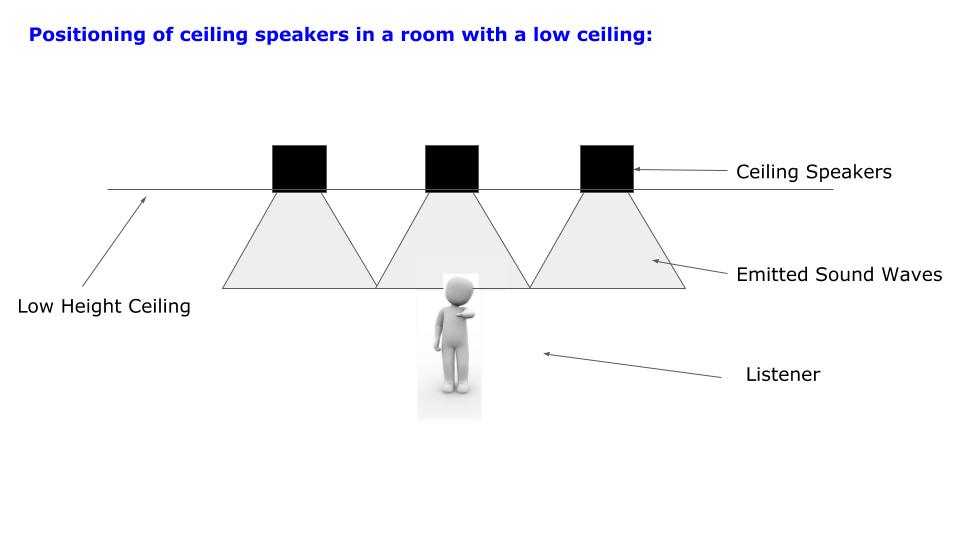
For example, ceiling height has an impact. Counterintuitively, high ceilings often
require fewer speakers than low ceilings, because as a ceiling is lowered, speakers
become closer to a listener’s ears.  So two identically sized rooms with different
ceiling heights will require different numbers of speakers.

“How does that work?”
Each speaker works by emitting waves of sound, these start at the centre of the
speaker cone and radiate outwards towards the floor.  Ideally, to avoid any sound
black-spots, the waves of sound from adjacent speakers should cross just above
a listener’s ear height, but with low ceilings, unless you use a speaker with a much
wider dispersion than normal, the number of speakers you need to achieve this
significantly increases.


“But having lots of speakers makes my ceilings look ugly!”
How many of your guests enter your venue and look up at the ceiling?
Unless you have wonderous artwork or lighting features on the ceiling,
most guests gaze at their eyeline or just above or below this point.
If however, you are concerned about this, CGA can now finish speakers
to any RAL or Pantone colour to ensure that your speaker grills
seamlessly blend into the ceiling whatever its colour.

So the key question to ask is not how can I reduce the number of
ceiling speakers I need, but how many speakers do I need to get the
best possible audio experience for my guests.

CGA Integration … Making hospitality sound great!

Tuesday, 27 November 2018

Sounds Good?

We have moved this content to and added more content on our new website:

www.cga-integration.co.uk


We all talk about “good sound” but what is good sound in a hospitality context?
Good audio is like good visual, it’s very personal and an individual's perception
of quality sound can be very subjective. Having listened to studio recordings of
music tracks, these are very different to the presentation of music that most end
users expect to hear, and with the increased use of mp3 and headphones, the
appreciation of sound is further changing.
That aside, however, there are still some key characteristics that demonstrate
the basis of good sound.

So what should you listen out for?

Good sound should be evenly distributed throughout a space; as guests move
around an area they should receive a consistent audio experience.  Expanding
from this, you should consider your space layout. In adjoining areas where there
is no wall, door or physical barrier, or where the door will be open much of the
time, the sound will travel between adjoining spaces so you need to consider
how zonal sound can be used to create a more consistent experience for your
guests. A great sound system will also envelop you as you enter a space and
the actual sound sources should be hard to define.  This does not mean that
the sound needs to be loud, just seamless. In addition, the sound should be
balanced; there should not be too much or too little bass, mid or high frequency,
(unless of course, you are building a nightclub), and this mix should remain
balanced at both low and high volume levels. Another key area to consider is
where you might need less sound.  You may want lower sound levels in bar
areas and at service points to improve conversation and communication flow
between your customers and your team.

So what are the traps that lead to bad sound and how can these be avoided?
Considering audio hardware, there are certain things that you can do to maximise
the quality of your Hospitality sound.  
Unless you can get wall mounted speakers high above head height, installing these
in big spaces isn’t ideal, as they just make the perimeter of that space louder than
the centre and you don’t create a consistent audio experience.  Similarly, unless you
are on a stage or in a nightclub environment, splitting sound across separate bass
and mid high cabinets can often lead to unbalanced sound and should be avoided.
Using small speakers, although often considered aesthetically pleasing, cannot
supply a warm full sound.  A better alternative is the use of full range speakers,
possibly finished in a custom RAL colour to match your chosen decor, as these
can deliver superior sound whilst blending with your interior design.
Thinking about sound system design, considering the acoustics of a space is
also key in delivering the best possible sound.  Speakers pointing at or across
hard reflective surfaces will not generate good sound. Similarly, sound systems
created with many different areas and speakers but only a few amplifier channels
do not work.  To get great sound, different areas and speakers often need a
different amplifier channel and EQ. Finally, once the system design and hardware
have been considered, the music content needs to be addressed.  Not just what
tracks you are playing to evoke the right mood for your venue or for a particular
time of day, but the type of music format you are using to create the best possible
sound.  The quality at which a track is recorded makes a huge difference to the
end result of how that track sounds when it is played through a sound system.
No matter how good a sound system design and installation is, if you put in poor
quality music you get out louder poor quality music!  Conversely, with a well
designed and installed audio system, if you put in well-recorded music you get
out great sounding music.
To help with this and to avoid any of the legal copyright issues, look to professionally
curated music lists and fit these in a player.  This prevents your staff from putting on
their favourite tracks or from plugging in their phones which will help you to avoid
both legal and branding pitfalls.

So to make a hospitality venue sound good, good sound needs to make a sensory
engagement with your guests, and this can be achieved by the audio being an
integral part of the design, decor and planning of a new or refurbished space.